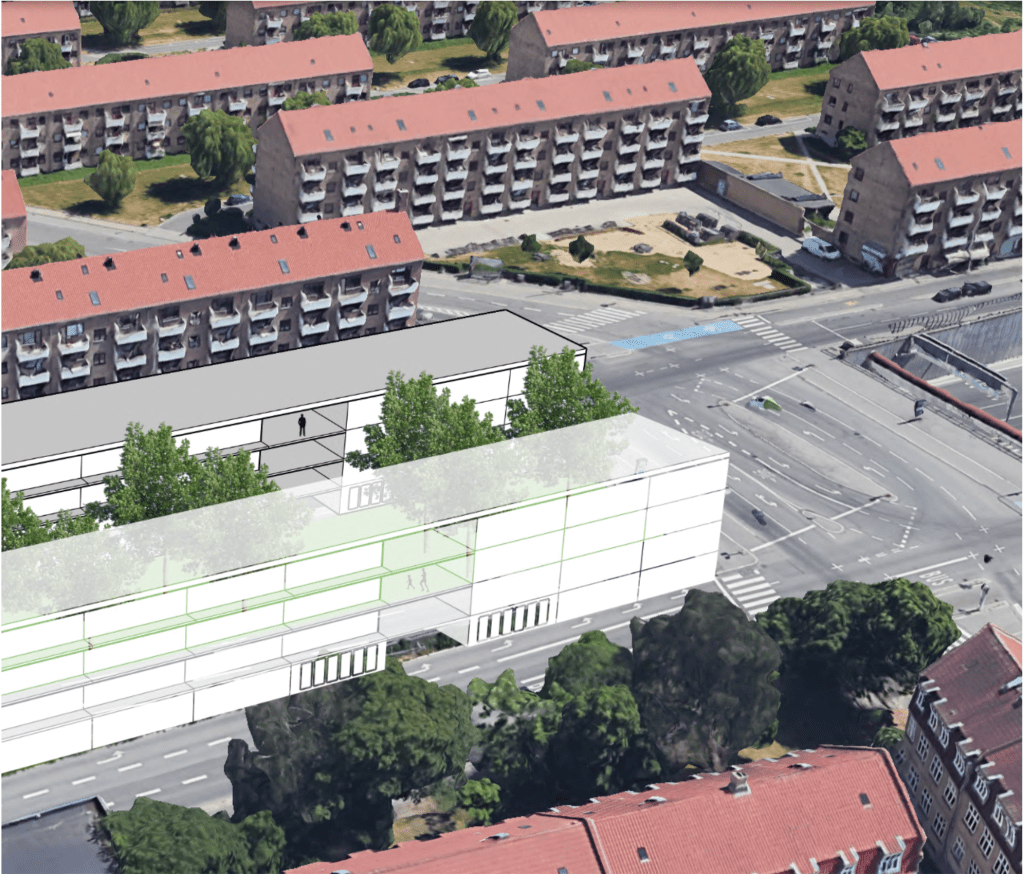
As a drawing exercise in my own time, I modelled my own apartment and began thinking about the unit’s plan and how the space is used.
After further consideration, I noticed that the unit could easily be used as a residential module that could be grouped together with other modules to form a building.
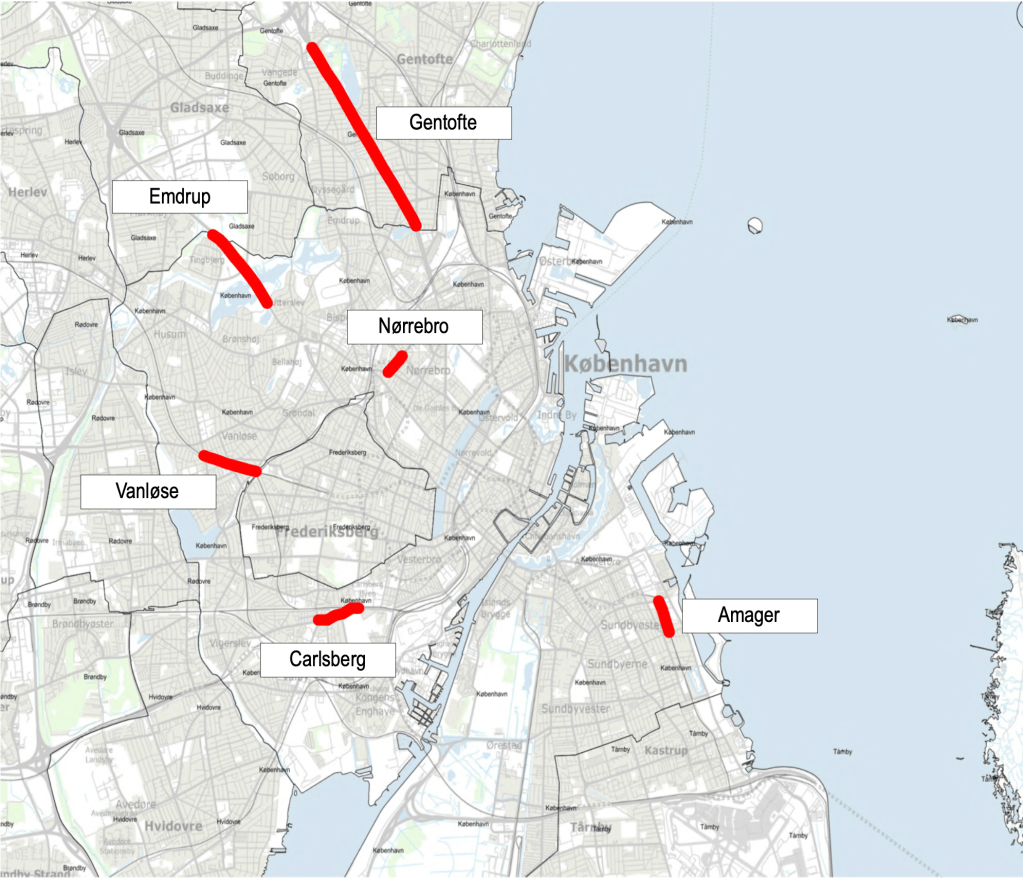
Inspired by housing crises in metropolitan cities, I further developed the idea to create a project called Healing the Highway which utilizes 4 types of modules in a linear form. I focused on the greater Copenhagen area and did background research to develop a map of where this strategy could be deployed.
The proposed linear sections included Gentofte, Emdrup, Nørrebro, Carlsberg, Vanløse and Amager. These six areas have long strips of road that are not currently being used effectively.
The name of the project is Healing the Highway because the idea is to heal a space that doesn’t provide a specific purpose other than being just a through road and create more housing and community spaces for people to live and interact with each other.
Based on the apartment unit, three other blocks were developed. A commercial space, community area, an elevator/stair and passthrough block. All the blocks can be flipped or turned to suit different areas given the local conditions such as allowing for more sunlight. The combination of blocks are adjustable and suit many types of living. The blocks can also be stacked to provide height and more flexibility.
Community spaces play a pivotal role in enhancing the well-being and quality of life for individuals in various ways.
The apartment block would easily suit many types of families, young professionals or students.
The community blocks are very important as community spaces play a pivotal role in enhancing the quality of life for individuals in many ways.
The commercial block would exist seamlessly as a second type of community space. Shops or cafes would succeed as local businesses on the ground level whereas a rooftop/green space would suit higher levels.
The elevator/stair and passthrough block is necessary for residents to move freely between the different floors and beneficial to allow people to pass through the building creating a greater connection across a highway.

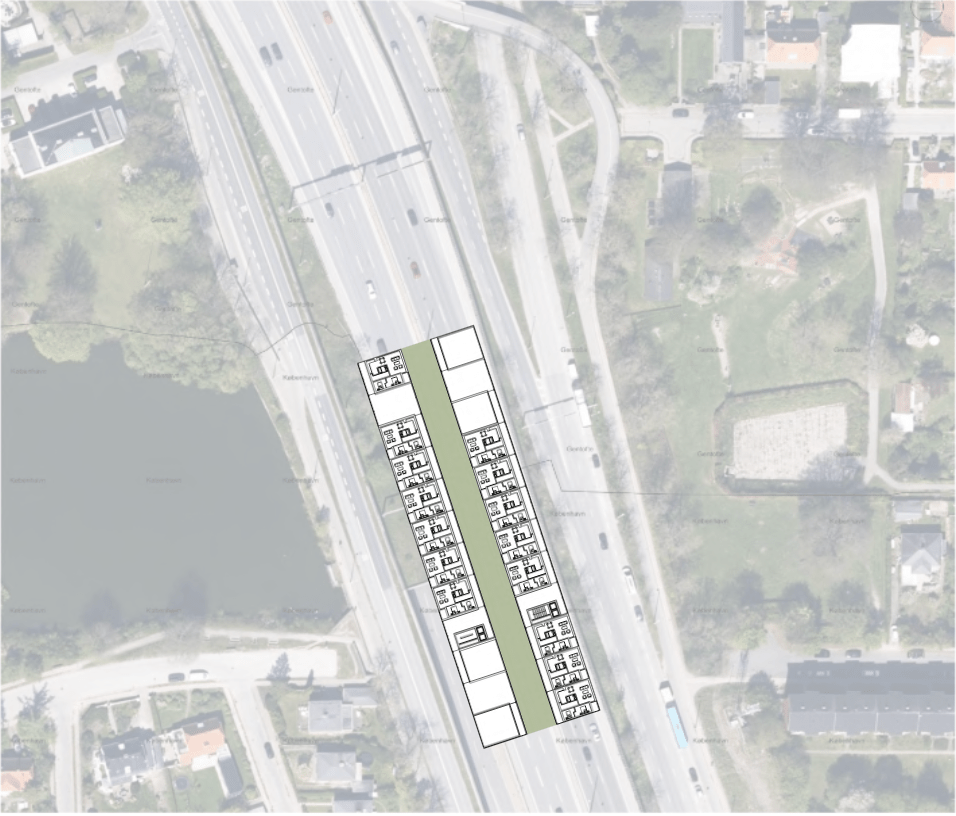
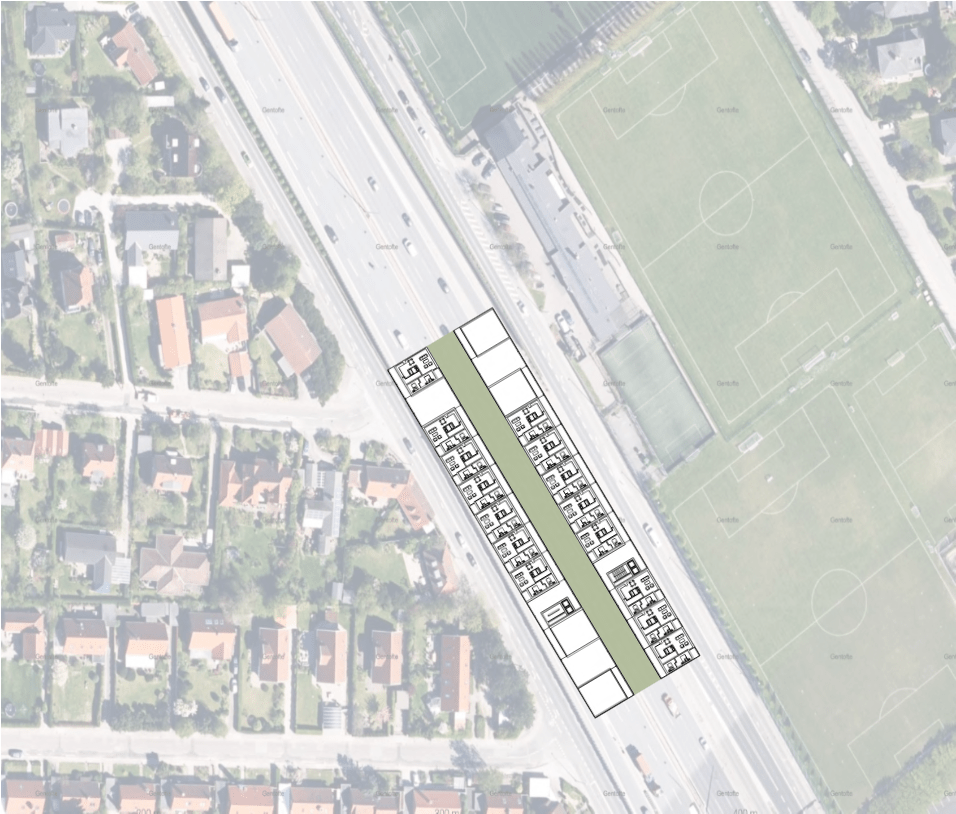
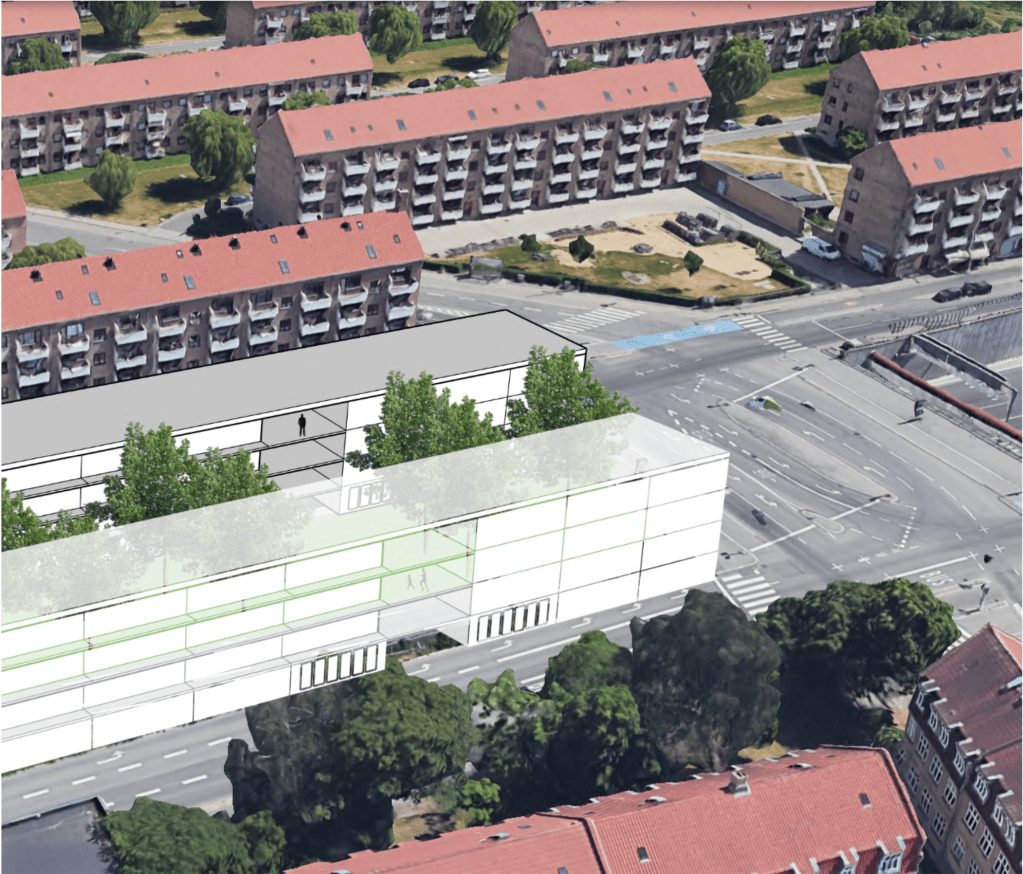
These examples below demonstrate the group of different block groups positioned on the highway. A green strip has been placed down the middle to represent a communal green space inspired by New York City’s High Line to invite people to pass through and interact.
The communal green space encourages foot traffic and creates a pedestrian- friendly environment.
The green space also encourages people to use the pass through blocks to easily cross the large road from various places and in turn promotes the local business situated in the retail blocks.
The apartment blocks are accessible on the ground level to suit disabled/elderly people as well as higher levels.

To complete the project, I developed an abstract visualisation to imagine the blocks placed on the highway. This innovative approach not only transforms the highway into a functional space but also fosters an inviting environment reminiscent of a high line park.
By strategically situating these blocks, the visualisation presents the blocks seamlessly weaving into the existing highway infrastructure.
I wanted to make the visualisation to present a more clear and realistic representation of the concept and notice the direct public impact.
Creating visualisations can be beneficial as powerful marketing tools along with allowing for potential issues to be identified early in the design phase.
 Annie Montgomery